Read along
Complete transcript
Hello and welcome to jasonnewland.com. My name is Jason Newland and this is Stress and Pain Relief Podcast. Please only listen when you can safely close your eyes. Now, I'd like you to focus on the part of your body which is causing chronic pain or stress.
Now, I realize there's chronic pain issues that can be part of more than one part of your body. It could be overall physical discomfort. But for this recording, I'd like you to focus on a specific part.
In an event of stress or tension, again, I know that it can feel like it's all over at times or even internal. But again, I'd like you to focus on, if you could kind of pinpoint a particular part of your body that has an obvious discomfort. For me, I hold stress sometimes in my shoulders, back of my neck, my forehead, my eyes, my lower back.
So just focus on one part of your body, whether it's your knee, your left knee, or your right elbow, your right thigh, your stomach, you know, wherever it may be. I'd like you just to focus on that one part. And I'm going to count down from 10 down to 1 as you focus on that part of your body.
And as I count down, you're going to be able to get a bit more in contact just with that part to the exclusion of the rest of your body. It's almost as if we're just going to ignore the rest of your body. Now 10, 9, 8, 7, 6, 5, 4, 3, 2, 1. I'd like you to imagine, I'd like to just expand a little bit from that area and focus on, it might just be a few inches, you know, from that area all the way around.
So let's, for example, imagine it's like a circle or, you know, a shape. So moving from that shape, just imagine that area is blue and it's actually the ocean. As I count down from 10 to 1, imagine that area surrounding the body part that we're focusing on is blue and it's becoming the ocean, may even be wavy.
10, 9, 8, 7, 6, 5, 4, 3, 2, 1. Now I'd like you just to expand the ocean almost so it just moves as far into the distance as you can imagine. So there's no longer really any body at all, no part of your body other than the one bit that you've got focused on before, but everything else is just the ocean and allow that to move.
Allow that ocean to grow and to widen to the point where there's nothing else there except that one bit that you're focused on.
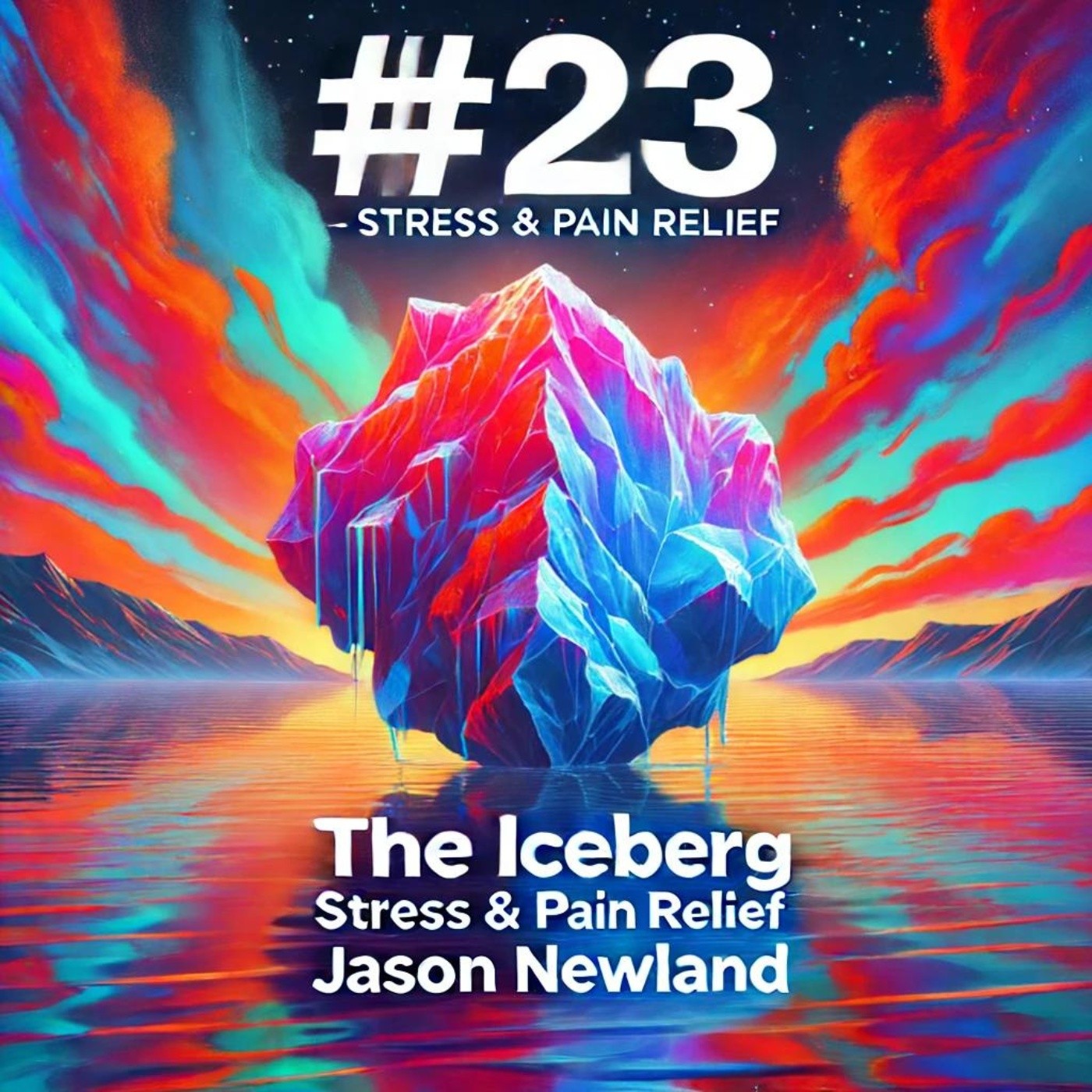
I'm going to count from 10 down to 1 and as I count down you can allow that ocean to expand either side of that particular body part that you've already focused on. Now 10, 9, 8, 7, 6, 5, 4, 3, 2, 1. And now as you focus on that body part that we had been focusing on before and imagine that's now become an iceberg, an iceberg sticking up out of the ocean, a big iceberg.
And notice how that iceberg grows and as you focus on that iceberg you get more in touch with it emotionally, you get more connected to it as I count down from 10 down to 1. 10, 9, 8, 7, 6, 5, 4, 3, 2, 1. And as you focus on that iceberg, that big iceberg that represents those particular physical sensations that you're experiencing, you're experiencing before we started this recording.
As you focus on that iceberg, you notice that it looks so strong, so big and so strong and you may feel almost helpless next to it thinking that, what can I do about such a thing? But then you get yourself a hammer, a chisel or maybe just a hammer, whatever you want to use and you bash on the side of that iceberg and you hit it a few times with a hammer.
But nothing happens and you might think, well what's the point? What's the point in hitting it with a hammer five times if nothing happens? But just because you can't see anything happening from the outside doesn't mean that there's nothing happening on the inside, just like our bodies. We can't see the liver and the kidneys and the lungs or the heart or the intestines or our spinal cord, the blood, the arteries, we can't see any of that stuff.
Doesn't mean it's not there, doesn't mean it's not doing something. So what we're going to do now is as I count down from 10 to 1, every number I want you to give it a big bash with the hammer, maybe a sledgehammer, maybe a hammer just to the side of the iceberg. And with each number the iceberg will become weaker.
Each time you hit the iceberg the ice will start to crumble and bits of ice will chip off and fall into the water. Not huge amounts, just a bit of ice will fall off. Each time you hit the iceberg with that hammer, with each number as we count down, and the further we get down, the bigger the pieces of ice that fall off that iceberg.
Now, 10, 9, 8, 7, 6, 5, 4, 3, 2, 1. And now we're going to move backwards, moving away from that iceberg. Giving some space, giving some distance, so you can watch it from afar. Because what's going to happen now, now that you've weakened the core of that iceberg, we're going to watch it start to just crumble into the sea.
And as I count from 20 down to 1, bit by bit the iceberg will crumble and huge bits of it will fall into the sea. Now, you can observe that iceberg falling to pieces into the sea. You can enjoy the feeling that you experience as it collapses and eventually just disappears.
So by the time you get down to the number 1, it'll all be gone. 10, 20, 19, 18, 17, 16, 15, 16, 14, 13, 12, 11, 10, 9, 8, 7, 6, 5, 4, 2, 1.
Paragraph spacing and recurring name or title errors have been tidied. Because this began as a voice transcription, an occasional word or piece of punctuation may still be incorrect.